Arc Raiders solo build guide
Build a stronger solo Arc Raiders route with the right mix of Mobility, Survival, and just enough fight support to escape bad raids.
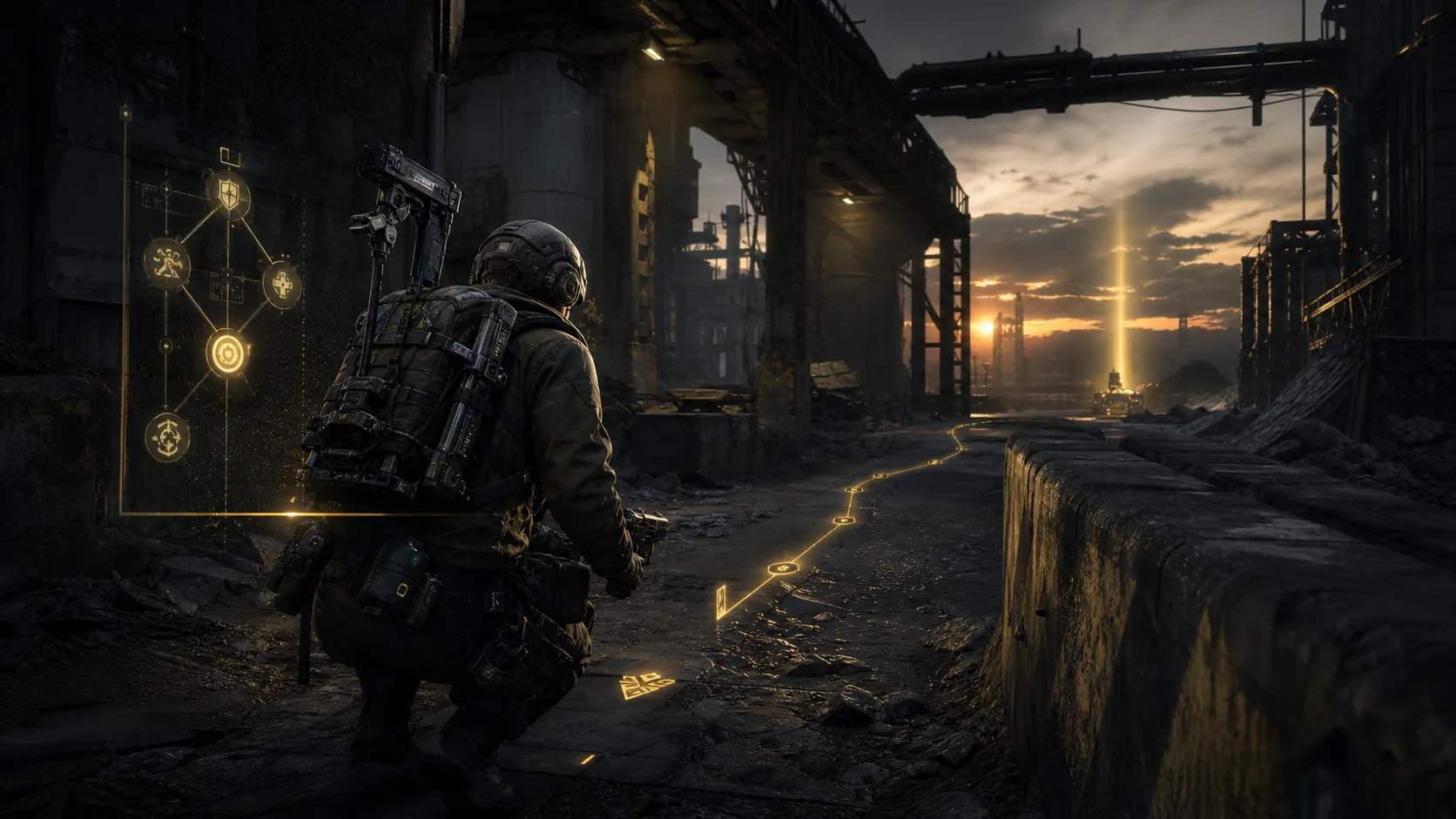
A good solo build is not a weaker squad build. It has a different job.
When you queue alone, you do not get another player covering a bad rotation, carrying extra utility, or finishing a fight after you make one mistake. Your tree needs to buy back some of that margin.
The solo build priorities
| Priority | Why it matters |
|---|---|
| Mobility | You need to choose fights and escape bad ones |
| Survival | Every clean extract needs to be worth the risk |
| Conditioning | Useful, but best added after the route works |
Before you build, know what the three branches actually do: the Mobility vs Survival vs Conditioning split explains the trade-offs in plain terms.
Start with movement
Solo players benefit from Mobility more than almost anyone else. Good movement keeps you from being trapped in fights you never wanted, and it gives you more chances to turn a bad raid into a merely average one.
I would usually want:
- Marathon Runner
- Youthful Lungs
- Nimble Climber
- Effortless Roll
You do not need every Mobility point in the tree. You need enough that the map does not constantly dictate terms to you.
Add Survival once the route is stable
The second half of solo play is making your successful raids matter. A player who escapes consistently but extracts poor value is still progressing slowly.
That is where Survival earns its place:
- Looter's Instincts helps you read containers faster
- Broad Shoulders improves carry value
- Agile Croucher supports quieter movement
- In-Round Crafting gives you more room to recover during longer raids
These are not flashy skills. They are the reason a clean solo night feels productive instead of merely safe.
Add Conditioning with restraint
Solo players still fight. The difference is that you usually want Conditioning to support a route, not define it from the first point onward.
If your current solo raids keep ending in direct fights, start adding tools such as Fight or Flight or Used To The Weight after your basic movement package is already in place.
That order matters. A stronger duel does not help if poor movement keeps putting you into the wrong duel.
A practical solo route shape
| Stage | Focus |
|---|---|
| 1-20 points | Mobility core plus light Survival |
| 21-40 points | Build loot consistency and field utility |
| 41+ points | Add targeted Conditioning based on your actual failure pattern |
This route keeps the build honest. You are not pretending every solo raid is a tournament match, but you are also not building so passively that one fight ruins the whole plan. If your goal is profit per run instead of survival consistency, a loot-focused build shifts the balance further into Survival.
Common solo mistakes
- Copying a creator PvP route because it looks strong, then finding out it assumes a much more aggressive playstyle
- Spending too many early points on greed while your movement is still weak
- Ignoring fight support completely and hoping stealth solves every raid
- Building for the raid you want instead of the raid you repeatedly get
What I would actually recommend
If I were building a solo route from scratch today, I would start with Mobility, add Survival until my good raids pay better, then use Conditioning to patch the exact fight problems I keep seeing.
That gives you a build that can loot, leave, and still defend itself when the game refuses to stay quiet. For concrete examples, compare the solo and loot builds against a balanced route before you spend the reset.
FAQ
What is the best branch for solo players?
Most solo players want a Mobility and Survival base. Mobility keeps you alive, while Survival makes successful extracts more worthwhile.
Do solo builds need Conditioning?
Usually yes, but not as the first priority. A little fight support helps, but solo routes fall apart faster when movement and extraction value are weak.
Should solo players copy squad PvP builds?
Only with caution. Squad builds can assume backup, trade pressure, and a different risk profile than solo raids.
What should a solo build avoid?
Overcommitting to one fight plan. Good solo builds keep enough flexibility to leave, loot, and reset when the raid gets ugly.